
SUBMIT YOUR DETAILS FOR
The Art of the First Impression: Transforming Your Ranch Entrance
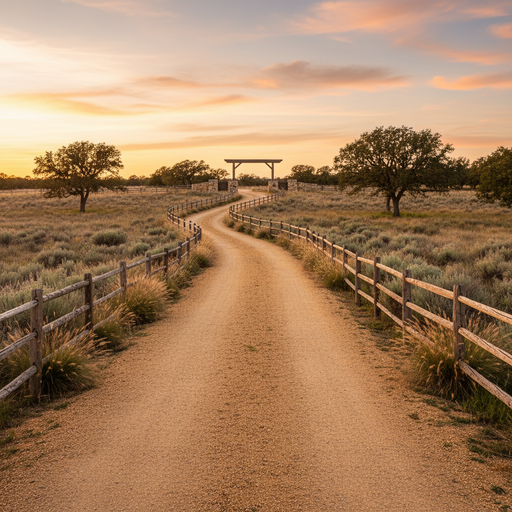
Imagine you are driving down a quiet country road. The air is crisp, the sky is wide, and the horizon seems to stretch on forever. Suddenly, you turn toward a property, and the transition feels magical. It isn’t just a patch of gravel or a strip of asphalt; it is a curated journey that whispers stories of heritage, nature, and home. This is the power of a well-executed ranch driveway landscape design.
For many ranch owners, the driveway is often an afterthought—a functional necessity to get from the main road to the house or the barn. However, if you view your driveway as the “handshake” of your property, you realize it sets the tone for everything that lies ahead. Whether you own a sprawling equestrian estate, a rustic farmhouse, or a modern highland retreat, your driveway is the first thing guests see and the last thing you experience when you leave. Let’s explore how to turn that dusty path into a grand entrance that balances rugged utility with breathtaking beauty.
Defining the Ranch Aesthetic: Rugged Meets Refined
Designing for a ranch is vastly different from designing for a suburban cul-de-sac. In a ranch setting, scale is your biggest challenge and your greatest asset. Small, delicate flower beds that look lovely in a city yard will be swallowed up by the vastness of a ranch. To succeed, you must think big and lean into the “rugged-refined” aesthetic.
The goal is to create a landscape that looks like it belongs there—as if the trees, stones, and paths were placed by nature, only slightly improved by human hands. This involves using native materials, respecting the natural topography of the land, and choosing plants that can withstand the elements without constant coddling. A successful ranch driveway design feels grounded, timeless, and effortlessly integrated into the surrounding wildness.
The Grand Entrance: Choosing the Right Gate and Pillars
The entrance gate is the focal point of your driveway. It serves as a psychological marker that you have arrived at a place of significance. When choosing a gate for a ranch, consider the architectural style of your home. A modern ranch might benefit from a sleek, black steel gate with horizontal lines, while a traditional cattle ranch calls for heavy timber or ornate wrought iron featuring a custom cattle brand or family crest.
But the gate is only half the story; the pillars or “monuments” holding it up are equally important. Using local stone for your pillars is one of the best ways to tie the driveway to the earth. Fieldstone, limestone, or river rock can be stacked to create sturdy, impressive structures that age beautifully over time. Consider adding integrated lighting into these pillars to provide a warm glow that welcomes you home after dark.
Surface Materials: Beyond Basic Gravel
While standard gray gravel is the most common choice for ranch driveways due to its cost-effectiveness, there are several other options that can elevate the look while maintaining durability. The material you choose dictates the “crunch” under your tires and the visual texture of the path.
- Decomposed Granite (DG): This material offers a softer, more natural look than standard gravel. It comes in various earthy tones like tan, gold, and reddish-brown, allowing you to match the soil of your region.
- Chipseal: If you want the look of stone but the stability of pavement, chipseal is an excellent middle ground. It involves a layer of asphalt topped with small stones, providing a rustic texture that is easier to plow in the winter than loose gravel.
- Recycled Asphalt: For a more sustainable and budget-friendly option, recycled asphalt hardens over time, creating a semi-solid surface that minimizes dust—a major win for long ranch roads.
- Cobblestone Accents: You don’t need to pave the whole mile in stone. Adding a “paved apron” of cobblestones or pavers just at the entrance and near the house creates a high-end feel without the high-end price tag for the entire length.
Native Planting: Working with the Land, Not Against It
One of the biggest mistakes in ranch landscaping is trying to maintain a lush, green lawn along a half-mile driveway. Not only is it a water-guzzling nightmare, but it also looks out of place in a wild landscape. Instead, embrace native planting. Native plants are adapted to your local climate, meaning they require less water and are resistant to local pests.
Think in layers. Start with hardy groundcovers and bunchgrasses like Little Bluestem or Mexican Feather Grass that sway beautifully in the wind. Add mid-level shrubs like Sagebrush, Lavender, or Red Yucca to provide structure and color throughout the seasons. Finally, frame the views with majestic trees. In the West, this might mean Ponderosa Pines or Quaking Aspens; in the South, Live Oaks draped in Spanish moss create a breathtaking “tuel” effect that feels regal and ancient.
Lighting the Path: Safety and Atmosphere
A ranch at night is a beautiful thing, but a pitch-black driveway can be a safety hazard. The key to ranch lighting is subtlety. You want to avoid “light pollution” that hides the stars. Instead of bright, overhead streetlights, use low-voltage landscape lighting to highlight specific features.
Consider “moonlighting” techniques, where lights are placed high up in trees and pointed downward through the branches to create soft, dappled shadows on the ground. Path lights should be used sparingly, perhaps only at sharp curves or bridge crossings. Solar-powered lanterns on fence posts are also a practical, wire-free way to mark the boundaries of the road without overwhelming the natural darkness of the countryside.
The Importance of Drainage and Durability
A beautiful driveway is useless if it washes away during the first heavy rain. Ranch properties often deal with significant runoff, so your design must prioritize drainage. This is where “swales” and culverts come into play. A well-designed swale is essentially a shallow, rock-lined ditch that runs alongside the driveway, catching water and directing it away from the road surface.
By lining these swales with larger river rocks and moisture-loving native grasses, you turn a functional drainage system into a beautiful dry creek bed feature. Additionally, ensure your driveway has a slight “crown” in the center so that water naturally sheds to the sides rather than pooling in the middle and creating potholes.
Fencing as a Design Element
Fences on a ranch are often functional—to keep livestock in or wildlife out—but they are also a major visual component of the driveway landscape. The classic three-rail wooden fence is a staple for a reason: it provides a clean, rhythmic line that draws the eye toward the house. For a more modern look, consider black-painted wood or wire mesh with a heavy timber frame. Using the same fencing material for the entire length of the driveway creates a sense of cohesion and order amidst the wilder elements of the ranch.
Conclusion: A Legacy in the Making
Ranch driveway landscape design is about more than just aesthetics; it’s about creating a sense of place. It’s about the feeling of relief when you turn off the highway and know you are finally home. By choosing materials that honor the land, planting greenery that thrives in its environment, and focusing on the small details like lighting and gates, you create a legacy. Your driveway becomes a testament to your respect for the land and your vision for the property. So, take a walk down your path, look at the horizon, and start dreaming—the perfect ranch entrance is just a few thoughtful design choices away.


